Martial arts is an ancient form of combat consisting of a variety of methods and techniques for fighting, defending oneself, and attacking. It encompasses physical, mental, and spiritual disciplines that help practitioners develop strength and skill. Martial arts styles can vary greatly in terms of the weapons or tools used (including fists, feet, and swords), how much contact is involved in a given technique or practice session (contact-based vs non-contact training), the emphasis on forms or self defense scenarios. Generally speaking, all martial arts style share a common purpose: self-improvement through physical training while incorporating elements of personal discipline.
Martial arts originated from various parts of the world and are believed to have been practiced since at least 2,000 BCE in Ancient Greece. It has evolved over the centuries and many different styles have developed depending on the region or culture in which it was practiced. The most popular forms of martial arts today come from East Asia, including Japan and China, with other popular forms originating from India, Southeast Asia, Europe and Brazil. Many people consider Asia to be the centre of the martial arts world as many of the most prominent martial arts such as kung fu, karate and hwa rang originate from the region.
Over the years, martial arts have been shaped by a culmination of factors to include ancient myths and legends to historical revolutions. Since the beginning of time, different cultures have developed styles of fighting in order to survive, but it is Chinese martial arts that has endured and flourished more than in any other country.
Martial arts evolved with the development of the human physiology and has grown into what we now recognise as martial arts in the modern era. Below, Beemat takes a look at the history of martial arts and how it has evolved over thousands of years to become what it is today.
CREATION OF MARTIAL ARTS
Martial arts techniques were created out of the need for survival between humanity and animals, and between different tribes of humans. From these battles, experiences and techniques were accumulated and recorded then passed down through the generations.
The invention of weaponry enabled new fighting techniques to be created. Different types and shapes of weapons were invented which led to different schools and styles of martial arts. These new styles were formed by imitating the fighting techniques of animals such as the tiger, panther, monkey, snake and bear as well as a number of birds and insects.
Mankind firmly believed that in order to survive in what was a harsh natural environment at the time, it was necessary to study animals’ natural talent and skill for fighting. The way to learn these techniques was to study and imitate these animals, for example the pouncing of a tiger or the attacking motions of an eagle.
Gradually, over the years, the martial techniques developed became a part of Asian culture
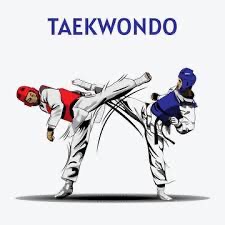
The teaching of martial arts in Asia has historically followed cultural traditions – students are trained in a strictly hierarchical system by a master instructor. The students are expected to memorise and recite as closely as possible the rules and basic training of martial arts whilst the teacher is expected to directly supervise the student’s training.
Students with more seniority are considered ‘older brothers and sisters’ whilst those with less seniority are ‘younger brothers and sisters’, and these relationships are clearly delineated and designed to develop good character, patience and discipline amongst students.
In some Asian countries, a student’s skills were tested for mastery before being allowed to study further – this traditional style has been widely ignored by many of the modern teachings in the West.
Martial arts is an incredibly diverse field, with many different forms and styles to learn. For example, some popular martial arts are karate, taekwondo, judo, aikido and jiu-jitsu. Each of these martial arts has its own unique set of rules and techniques for teaching the various disciplines involved in the practice.
When it comes to learning martial arts, the most important aspect is to find an experienced teacher who can guide you through the basics. Most martial arts teachers will start by explaining the fundamentals of the art form and breaking down each move so that it can be practiced properly. From there, students can begin to learn more complex techniques such as self defense moves and offensive techniques like striking and kicking. Additionally, certain types of martial arts may also focus on grappling tactics or weapons training; therefore having a comprehensive understanding of these skillsets is essential to mastering any style of martial art.
What do you think the best martial arts is?
 Site Title